







How Can Apartment Communities Make Better Use of Video Security?
How Can Apartment Communities Make Better Use of Video Security?
Posted by Mark Espenschied of Digital Watchdog on October 26, 2026
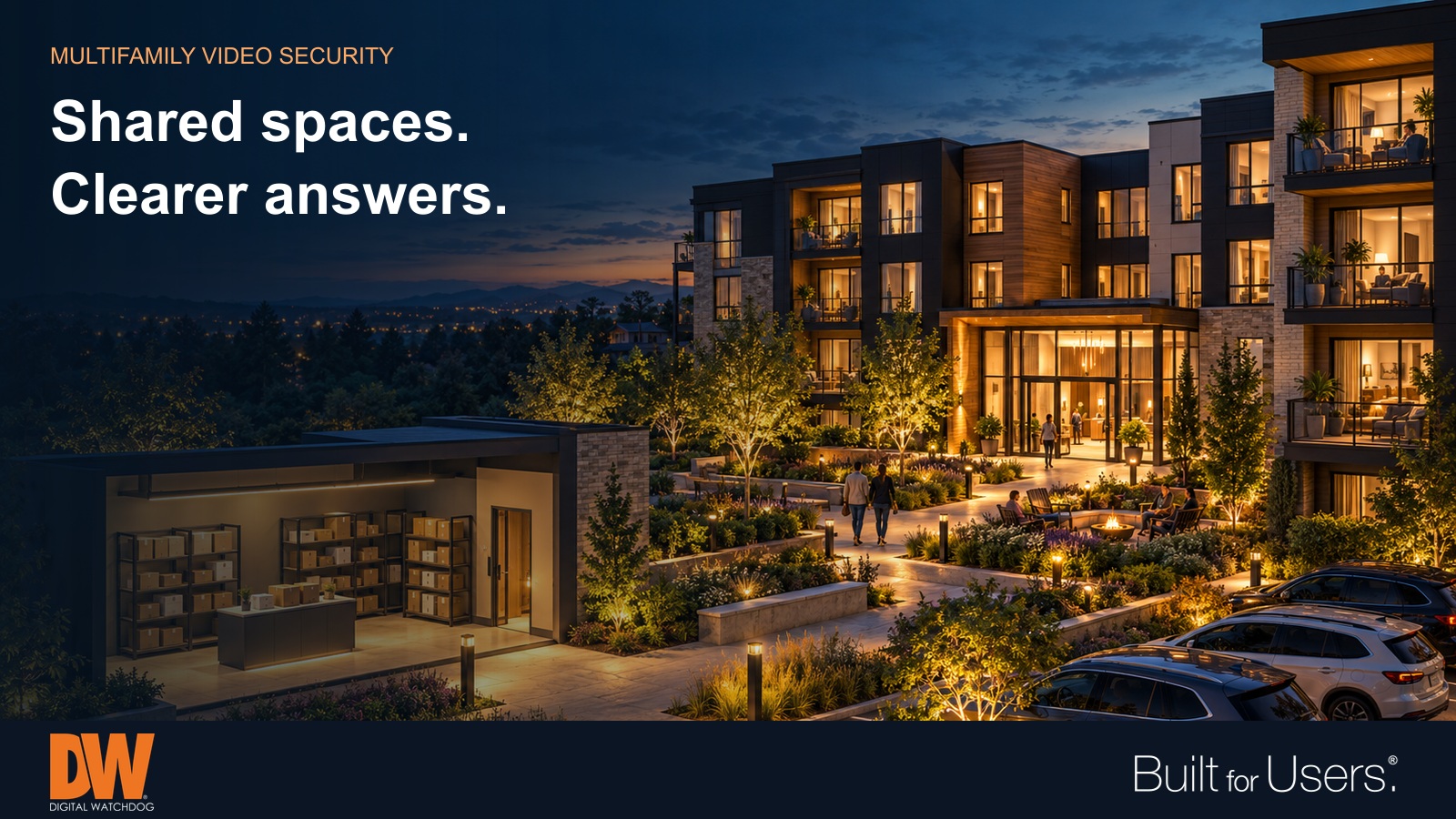
Thoughtful coverage of shared entrances, package rooms and parking areas helps residential teams investigate concerns and respect privacy.
A resident reports a missing package. Another finds damage to a parked car. The property manager needs a useful account of what happened, often with only an approximate time and location. A video system earns its place when it helps answer those everyday questions while respecting the people who call the community home.
For apartments, condominiums and other multifamily properties, planning should begin with shared spaces, clear responsibilities and realistic expectations. More cameras alone do not create a better process.
Start with the question staff must answer
Walk the property with the people who handle deliveries, maintenance and resident concerns. Identify recurring problems and the information needed to investigate them. At a package room, the question might be whether a delivery arrived and which entrance someone used afterward. At a garage, it might be when a vehicle entered or where damage occurred.
Give each proposed camera a defined job. An overview can establish movement through a courtyard; a closer entrance view may provide more useful detail. Decide where those views need to connect before choosing equipment. Include changes in lighting, landscaping and traffic throughout the day.
Follow the route through shared spaces
Package rooms, building entrances and parking areas often deserve attention because people and deliveries move between them. Coverage that captures only one part of the route can leave staff guessing about the rest.
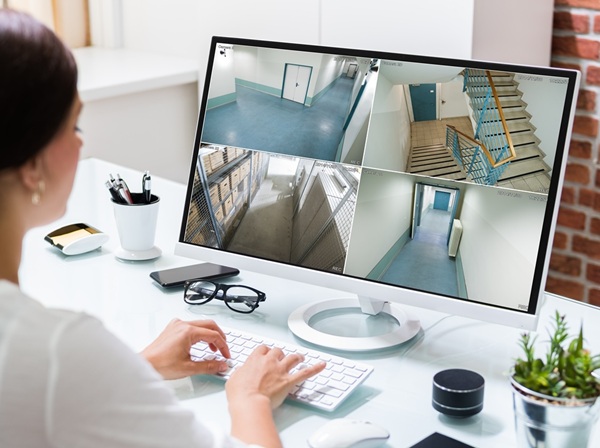
Consider an illustrative delivery complaint: a package-room view shows a parcel being left, an entrance view establishes the delivery time, and a lobby view helps reconstruct subsequent activity. Consistent timestamps and usable camera names make that sequence easier to review. The footage still needs careful interpretation; a person appearing near a parcel does not establish wrongdoing.
At amenities, focus on the operational question. A pool gate or clubhouse entrance may provide the necessary access context without broad coverage of every activity inside. Review camera placement as the property changes.
Test the view under real conditions
A clear daytime image does not establish that a camera will capture useful detail at night. Check entrances with sunlight behind arriving visitors, garages with headlights, and walkways after exterior lighting switches on. Confirm that signs, foliage or parked vehicles do not obscure the intended view.
Test recorded playback as well as live video. Ask a staff member to find a sample event, follow it between relevant cameras and export the needed segment. That exercise can reveal confusing names, missing views or an impractical review process before a resident needs help.
Treat privacy as part of the design
Keep the purpose of each view narrow and understandable. Review sightlines toward apartment windows, balconies and private living spaces. Use appropriate positioning or privacy controls to avoid collecting unnecessary detail. Establish who may view recordings, who may export them and how requests are handled.
Explain the community’s practices clearly to residents. Set a retention policy that reflects actual operational needs, and define how relevant footage is preserved when an incident is reported. Review applicable requirements with qualified advisers rather than assuming one policy fits every property.
Make alerts useful and assign a response
Analytics can help staff find relevant activity, but an alert only helps when someone knows what to do with it. Configure detection areas and schedules around a specific purpose, such as activity near a closed maintenance entrance. Review nuisance alerts and adjust the setup using real site conditions.
Avoid treating video analytics as proof of intent or a substitute for staff judgment. Decide which events require immediate attention, which belong in routine review and who receives each notification. A practical response plan matters as much as the detection itself.
Keep the system ready for the next question
Assign responsibility for checking recording, storage and connectivity. Review user access when staff or service providers change. Maintain supported software and firmware, and include playback and export checks in routine service.
For a management company overseeing several properties, consistent naming and permissions can simplify assistance from regional staff. Local teams should still know whom to contact when a recording is missing or a device needs service. The goal is a dependable process that supports resident concerns without making promises the system cannot keep.
How DataNet IT Can Help
DataNet IT offers MEGApix Ai camera options, DW Spectrum IPVMS video management software and Blackjack recording servers that can be considered together around a site’s coverage and operational needs. Relevant analytics can support detection and review when selected and configured for the application.
The myDW Health Monitoring System adds another important consideration: ongoing visibility into supported systems. Its health monitoring, alerts and reports can help integrators identify recording, connectivity or storage issues and organize a response. Contact us today to see which products, service options and maintenance responsibilities fit your deployment.
About Digital Watchdog
Digital Watchdog (DW) is a leading provider of advanced video surveillance and security solutions, offering digital recorders, intelligent cameras, AI-powered analytics, management software, and cloud-based platforms. Founded in 1987, DW serves organizations across retail, healthcare, government, financial, enterprise, and other industries, delivering scalable, reliable security technology designed to protect people, property, and critical assets.